Hypnosis is a potent tool for healing past wounds, shifting perspectives, and tweaking behaviors. Hypnotherapy facilitates changing your inner experience, rewriting memories, altering beliefs, and planting visions for your future.
Debra LeGere, LCSW, NBCFCH
The American Psychological Association defines hypnosis as “A state of consciousness involving focused attention and reduced peripheral awareness, characterized by an enhanced capacity for response to suggestion.” (Elkins, G.R., Barabasz, A.F., Council, J.R., Spiegel, D., 2015).
Picture clinical hypnotherapy as a collaborative dance between you and your hypnotherapist. During a hypnosis session, your hypnotherapist will guide you into a state of relaxation that is commonly referred to as a “trance” state. The word “trance” can sound a bit “woo-woo” or mysterious to some. So, let’s demystify it. We all dip into light to medium trance states every day. For instance, have you ever been so engrossed in a book, TV show, a video game, your phone, or your computer screen that someone could be waving flags at you, and you wouldn’t even notice? You were so absorbed in what you were doing that you were not paying attention to what was going on around you. You were in a light to medium trance state.
Will I lose control?
A concern about “losing control” sometimes comes up with my clients. However, research states that only 8% of individuals delve so deeply into a hypnotic state that they may not recall every detail. For most people, it’s more about entering a deeply relaxed state while still holding onto most of the experience.
For example, have you ever found yourself arriving at a destination wondering how you got there ~ because you zoned out during the drive? That’s a light trance state in action ~ part of you was aware of the drive, yet another part of you had its own agenda.
Imagine a hypnosis session like participating in a sport. On one level, you’re aware of your surroundings, but your primary focus is on the game. Or, you may be so focused on winning the game, that you lose awareness of your surroundings at times.
This type of feeling embodies the essence of “a state of consciousness involving focused attention and reduced peripheral awareness”. You’re cognizant of where you are, but your awareness has zeroed in on your inner experience.
Now, let’s clarify what clinical hypnotherapy is NOT… * It’s not magic. * It’s not guided imagery. * It’s not for everyone. * There are no guarantees.
Hypnosis can be a potent tool for healing past wounds, shifting perspectives, and tweaking behaviors. But it’s not about pulling rabbits out of hats.
Sometimes, one session is all it takes. Other times, we unveil other issues and embark on a deeper exploration down the road.
For example, a client might use hypnosis to help manage binge-eating. The session may unveil a link to anxiety, prompting another session to address the anxiety (the root cause of their desire to binge).
Hypnotherapy may facilitate changes in your inner experience, may rewrite memories, alter beliefs, and plant visions for your future.
Here’s the scoop:
Your subconscious mind, the star performer during hypnosis, introduces only what you’re emotionally prepared to handle. Consider it your best friend. It knows everything about you and is always looking out for your best interests.
Plus, you’re the captain of the ship. Even with your eyes closed, you’re in conversation with your hypnotherapist. If things get a bit too intense, or awkward, you can simply declare a pause, or open your eyes and wrap up the session~ it’s entirely up to you.
Just in case you missed it…
Hypnosis is NOT for everyone. Mental health clinicians will not use hypnosis with someone unless they are relatively stable mentally and emotionally. If hypnosis doesn’t resonate with you ~ I wouldn’t recommend it.
Thank you to REI and Florence Williams for this wonderful read. Science is backing up what we already know about the healing power of nature.
THE NATURE FIX: THE THREE-DAY EFFECT
written by: Florence Williams
Ken Sanders is a seller of rare books in Salt Lake City. Before that, he used to guide rafting trips down the Green and Colorado rivers for commercial clients and for his pals, like Edward Abbey. Starting on the third day, he’d notice the vibe of the whole group change.
“An awareness sets in that the river is now your new reality,” says Sanders, who’s been running rivers for 40 years. “The ritual of unloading the boats, setting up your campsite, gathering around the fire, sharing meals, etc. is now your day-to-day existence. It’s a bonding experience. Your old reality fades away.”
Sanders shared his observation with cognitive neuroscientist David Strayer, who teaches and conducts research at the University of Utah. It immediately struck a chord with Strayer, an avid backpacker who noticed that some of his best ideas emerged after three days of camping out.
“Having hiked around the desert for years, I noticed in myself, and from talking to others, that people think differently after being out in the desert. Their thoughts are clearer, they’re certainly more relaxed, they report being more creative,” says Strayer. “If you can disconnect and experience being in the moment for two or three days, it seems to produce a difference in qualitative thinking.”
Strayer wanted to find ways to test what he started calling “the three-day effect,” a kind of neural reboot that might boost creativity. “I wanted to try to understand what was going on inside the brain,” he says.
So, for a study published in 2012, Strayer and his colleagues Paul and Ruth Ann Atchley from the University of Kansas administered tests to 28 backpackers before and after going on Outward Bound trips. Immediately after a trip, the participants performed 47 percent better in a word-test game that measures creative thinking and insight problem-solving. The game is called the Remote Associates Test, or RAT. It poses a series of three words; for example, tug, gravy and show. The test taker has to come up with the fourth word that fits with all three; in this case, boat.
“A near 50 percent improvement is huge!” says Strayer.
What caused it? Strayer believes the frontal cortex (our executive taskmaster) of the backpackers’ brains got a much-needed break. Strayer often studies networks in the brain, especially the attention network, which typically gets pretty fried in the normal course of life these days. So many things demand our attention: emails, pings, deadlines, chores, grocery lists, elusive parking spots, and, as William Wordsworth put it, all the “getting and spending.” The world, wrote the poet, “is too much with us.” And that was in the early 1800s!
When the attention network is freed up, other parts of the brain appear to take over, like those associated with sensory perception, empathy and productive day-dreaming.
“That first day in nature, your mind is recalibrating and you start to notice things a little bit, to unwind from the modern world,” says Strayer. “You notice cloud patterns, sounds and smells, and it becomes really acute. You don’t need a watch anymore. You forget what day of the week it is.”
The Strayer team’s results caught the attention of some other neuroscientists, such as University of Nebraska researcher Frank Ferraro III, who normally studies addictive behaviors. Curious to see if he could replicate the creativity findings, he gave a similar RAT test to college students before and after a six-day canoeing trip in the Boundary Waters Canoe Area Wilderness in northern Minnesota. This time he also had a control group, a bunch of students who would take the test six days apart in a classroom setting. The earlier results were confirmed: The campers showed a 50 percent improvement after the trip, but there was no meaningful change in the control group.
An older study suggests the cognitive surge isn’t just a vacation effect. In 1991 psychologist Terry Hartig and colleagues tested backpackers as well as people taking sightseeing and other types of vacations, and found increased performance only in the backpackers.
Now Strayer is drilling down further to a part of the attention network, the midline of the frontal cortex, where theta waves become active when we are performing demanding cognitive tasks. He already has data indicating those waves quiet down out in nature, but not, notably, if you’re using your phone at the same time.
His advice: Go outside for three days, and turn the phone off.
Ken Sanders agrees. “I think it takes the first two days and nights to wash away whatever veneer of civilization you have brought with you. The new reality begins on that third day.”
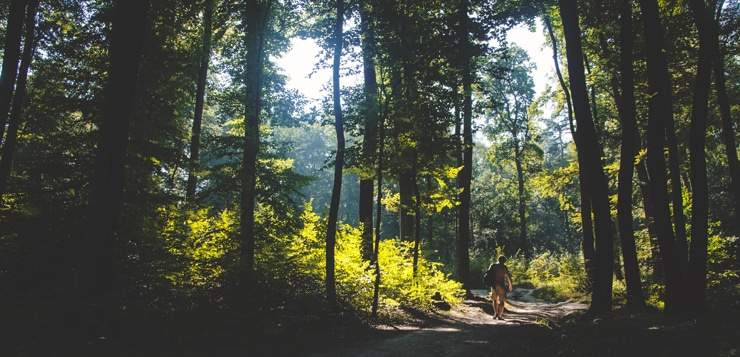
I’ve loved hiking in the woods ever since my Aunt Ree took me on my first walk in the woods as a small child. It felt like I entered a brand new world – a magical world of trees, moss and animals. A world apart from my normal everyday life, which was far from magical and far from peaceful. I still remember having my peanut butter and jelly sandwich with her on a stop along the trail. It was the most peace I had ever felt. Still today, I find solace in the woods, and hike as often as possible.
Tomorrow I am taking a class in Shinrin-Yoku – or “forest bathing”. I already KNOW how great I feel after being in nature, hiking, kayaking, walking – but I’m excited to learn more about the health benefits of forest bathing from a scientific standpoint. Below is a great article written by Karin Evans and published in the Greater Good Magazine.
I’ve also added a quick 1 minute video (scroll down to the bottom) for those who don’t have the time to read the article; i.e. those of you that would probably benefit from a great forest bath 😉
Why Forest Bathing Is Good for Your Health
From the Greater Good Magazine – Science Based Insights for a Meaningful Life
“Nature deficit disorder” is a modern affliction. With more people living in cities, working in high-rise office buildings, and becoming addicted to their innumerable electronic devices, many of us are indeed experiencing a nature deficit. This is true for children and adults alike.
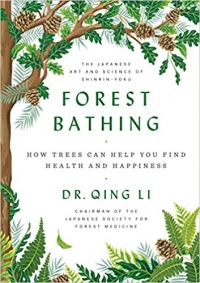
In his new book, Forest Bathing: How Trees Can Help You Find Health and Happiness, Japanese medical doctor and researcher Qing Li presents some sobering statistics: By 2050, according to the United Nations Population Division, three quarters of the world’s people will live in cities. Even now, the average American spends 93 percent of the time indoors, and some ten hours a day on social media—more than they spend asleep.
The Kumano Kodo trail in Japan
In Japan, there’s enough awareness about this deficit that Li heads up an organization called The Japanese Society of Forest Medicine, which promotes research on the therapeutic effects of forests on human health and educates people on the practice of forest bathing. His book—a companion to the center he runs—explores research on these benefits, while offering a number of techniques we can use to enhance them.
“Some people study forests. Some people study medicine. I study forest medicine to find out all the ways in which walking in the forest can improve our well-being,” writes Li.
The history of forest bathing
Japan is a country that is both urbanized and heavily forested. Trees cover two-thirds of the island’s landmass, and yet a majority of Japan’s people live in crowded city conditions. Li himself lives in Tokyo, a city he describes as “the most crowded city in the world.”
Perhaps that’s why the art of “forest bathing”—shinrin-yoku—began there. Forest bathing involves slowly walking through a forest, taking in the atmosphere through all your senses, and enjoying the benefits that come from such an excursion.
In 1982, Japan launched a national program to encourage forest bathing, and in 2004, a formal study of the link between forests and human health began in Iiyama, Japan—a place particularly known for its lush, green forests. Now, each year upwards of 2.5 million people walk those forest trails as a way to ease stress and enhance health.
Li’s interest in forest research began when he was a stressed-out medical student. He went away for a week of forest camping, and found it restored his physical and emotional health. That inspired him to begin researching the benefits of forests on human health and well-being. In 2004, he helped found the Forest Therapy Study Group, aimed at finding out why being among trees makes us feel so much better.
After years of careful study, Li has found that spending time in a forest can reduce stress, anxiety, depression, and anger; strengthen the immune system; improve cardiovascular and metabolic health; and boost overall well-being.
“Wherever there are trees, we are healthier and happier,” writes Li. And, he adds, it isn’t about exercising—like hiking or jogging—it’s simply about being in nature.
Why would this be? It’s long been recognized that humans have a biological need to connect with nature. Some 20 years ago, American biologist E. O. Wilson noted that humans are “hardwired” to connect with the natural world, and that being in nature had a profoundly positive effect on human health.
Li’s research seems to corroborate this. For example, one of his studies looked at whether forest bathing could improve sleep patterns among middle-aged Tokyo office workers who tended to suffer sleep deficiency due to high levels of stress. During the study, participants walked the same amount of time in a forest that they usually did in a non-forest setting on a normal working day. After a walk in the forest, participants were significantly less anxious, slept better, and slept longer. In addition, researchers found that afternoon walks were even more beneficial than morning walks.
“You sleep better when you spend time in a forest, even when you don’t increase the amount of physical activity you do,” reported Li.
To further assess the effects of time spent in a forest, Li measured people’s moods before and after walking in the woods or in an urban environment. While other studies have shown that walking anywhere outdoors reduces depression, anxiety, and anger, Li found that only the experience of walking in a forest improved people’s vigor and reduced fatigue.
The health secrets of trees seem to lie in two things—the higher concentration of oxygen that exists in a forest, as compared to an urban setting, and the presence of plant chemicals called phytoncides—natural oils that are part of a plant’s defense system against bacteria, insects, and fungi. Exposure to these substances, says Li, can have measurable health benefits for humans. Physiological stress is reduced, for example, and both blood pressure and heart rate are lowered. Evergreens—pine, cedar, spruce, and conifers—are the largest producers of phytoncides, so walking in an evergreen forest seems to have the greatest health benefits.
How to do forest bathing
So, is there a specific art to forest bathing? Or is it just as easy as a walk in the woods?
Connecting with nature is simple, writes Li. “All we have to do is accept the invitation. Mother Nature does the rest.” Here are some of his suggested steps.
Find a spot. Depending where you are, find a good source of nature. One doesn’t need to journey deep into a forest for these benefits. Just look for any green area. It could be an urban park, a nature preserve, or a trail through suburban woods. Forests with conifers are thought to be particularly beneficial.
“Let your body be your guide. Listen to where it wants to take you,” Li says. Some people will respond to sunny glades, others to shadier places. Listen to your own wisdom. For people who don’t have access to a forest, or can’t get outside for some reason, infusing essential tree oils in your home can provide benefits, too.
Engage all your senses. “Let nature enter through your ears, eyes, nose, mouth, hands, and feet,” says Li. Actively listen, smell, touch, and look. “Drink in the flavor of the forest and release your sense of joy and calm.”
Don’t hurry. Slow walking is recommended for beginners. And it’s good to spend as much time as possible. You’ll notice positive effects after twenty minutes, says Li, but a longer visit, ideally four hours, is better.
Try different activities. Try doing yoga in the woods, or Tai chi, or meditation. Take a picnic. Write a poem. Study plants. You can venture alone, or with a companion. In Japan, forest walking therapists are even available.
Appreciate the silence. One of the downsides of urban living is the constant noise. If you’re lucky, you’ll find a wooded area that’s free from human-produced sound. Silence is restorative, and a forest can have its own healing sound—rustling leaves, a trickle of water, birdsong. Spend a few quiet moments with a favorite tree. If nothing else, when we connect with nature we are reminded that we are part of a larger whole. And that, Li notes, can lead us to be less selfish and to think more of others.
Li’s book, which includes illustrations and a map of “40 Beautiful Forests Across the World,” is an invitation and an inspiration to take a walk in the woods, wherever you are.
VIDEO: What is Japanese Forest Bathing and How Can It Improve Your Health?
“Human beings are experts at showing up for the demands of the world. We keep driving forward—for our boss, our parents, our partners, or even ourselves—trying to live up to what’s expected of us, as defined by those around us.
Until suddenly, one day, we break.
Experiencing a breakdown can be inconvenient, uncomfortable, and even frightening, but it comes with an important message. In this video from School of Life, philosopher Alain de Botton explains how breakdowns provide you with an opportunity to learn what you really need from life.” Continue reading the article HERE
Hypnosis — or hypnotherapy — uses guided relaxation, intense concentration, and focused attention to achieve a heightened state of awareness that is sometimes called a trance. The person’s attention is so focused while in this state that anything going on around the person is temporarily blocked out or ignored. In this naturally occurring state, a person may focus his or her attention — with the help of a trained therapist — on specific thoughts or tasks.
How Does Hypnosis Work?
Hypnosis is usually considered an aid to psychotherapy (counseling or therapy), because the hypnotic state allows people to explore painful thoughts, feelings, and memories they might have hidden from their conscious minds. In addition, hypnosis enables people to perceive some things differently, such as blocking an awareness of pain.
Hypnosis can be used in two ways, as suggestion therapy or for patient analysis.
Suggestion therapy: The hypnotic state makes the person better able to respond to suggestions. Therefore, hypnotherapy can help some people change certain behaviors, such as stopping smoking or nail biting. It can also help people change perceptions and sensations, and is particularly useful in treating pain.
Analysis: This approach uses the relaxed state to explore a possible psychological root cause of a disorder or symptom, such as a traumatic past event that a person has hidden in his or her unconscious memory. Once the trauma is revealed, it can be addressed in psychotherapy.
What Are the Benefits of Hypnosis?
The hypnotic state allows a person to be more open to discussion and suggestion. It can improve the success of other treatments for many conditions, including:
Hypnosis also might be used to help with pain control and to overcome habits, such as smoking or overeating. It also might be helpful for people whose symptoms are severe or who need crisis management.
What Are the Drawbacks of Hypnosis?
Hypnosis might not be appropriate for a person who has psychotic symptoms, such as hallucinations and delusions, or for someone who is using drugs or alcohol. It should be used for pain control only after a doctor has evaluated the person for any physical disorder that might require medical or surgical treatment. Hypnosis also may be a less effective form of therapy than other more traditional treatments, such as medication, for psychiatric disorders.
Some therapists use hypnosis to recover possibly repressed memories they believe are linked to the person’s mental disorder. However, the quality and reliability of information recalled by the patient under hypnosis is not always reliable. Additionally, hypnosis can pose a risk of creating false memories — usually as a result of unintended suggestions or the asking of leading questions by the therapist. For these reasons, hypnosis is no longer considered a common or mainstream part of most forms of psychotherapy. Also, the use of hypnosis for certain mental disorders in which patients may be highly susceptible to suggestion, such as dissociative disorders, remains especially controversial.
Is Hypnosis Dangerous?
Hypnosis is not a dangerous procedure. It is not mind control or brainwashing. A therapist cannot make a person do something embarrassing or that the person doesn’t want to do. The greatest risk, as discussed above, is that false memories can potentially be created and that it may be less effective than pursuing other, more established and traditional psychiatric treatments.
Who Performs Hypnosis?
Hypnosis is performed by a licensed or certified mental health professional who is specially trained in this technique.
Your Breath is Your Brain’s Remote Control
A new study has found evidence to show that there is actually a direct link between nasal breathing and our cognitive functions.
How to Fight Stress with Empathy
Psychologist Arthur Ciaramicoli argues that empathic listening may be the key to reducing stress in our lives.
Two Lessons on Blame from Brené Brown
An animation featuring Brené Brown sharing a story about why she identifies as a blamer, as well as research and insights about this toxic behavior.
How to Practice Mindfulness
Becoming more aware of where you are and what you’re doing, without becoming overly reactive or overwhelmed by what’s going on around you.
6 Books to Get You Unhooked from Bad Habits
Food cravings, telling off grumpy colleagues: some habits are hard to avoid even on our best days. We’ve rounded up these mindful books on the science and practice behind habit-formation.
How to Stop Your Stories From Running Your Life
Research suggest we not only have the capacity to pay attention to and stop the chatter of our stories, but we can also reduce our stress and reinvent our relationships by responding to them differently.
In case you missed it: Stand-out pieces from the past year you might want to know about.
The Future of Education: Mindful Classrooms
Creating a safe place for our kids to learn might begin with creating some space for them to breathe. Here’s an in-depth look at the research and best practices for bringing mindfulness into schools.
Meditators Under the Microscope
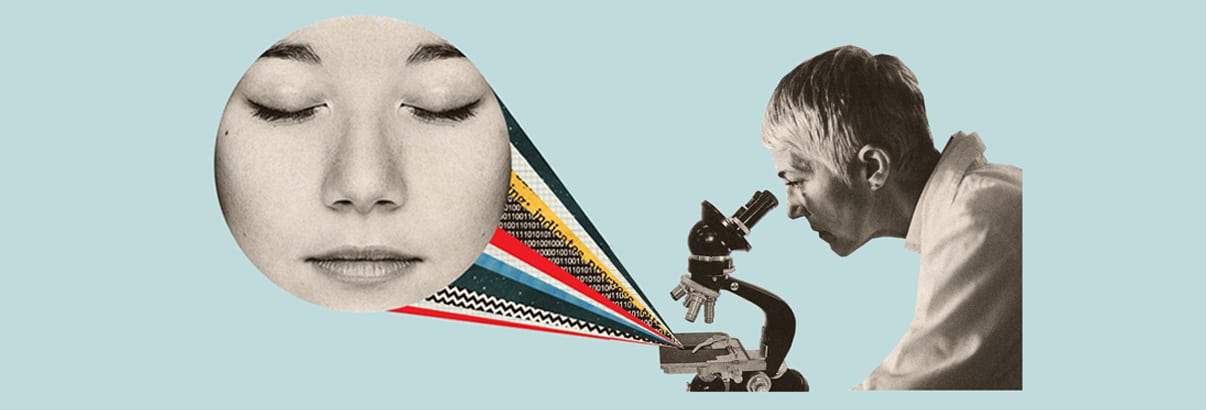
The benefits of meditation have been hard to show in concrete terms. Today, however, as the scientific world delves into the study of mindfulness, the capacity of the brain to transform under its influence inspires nothing short of wonder.
10 Mindfulness Researchers You Should Know
Key insights from leading researchers spotlight what we know, what we don’t know, and what the future holds for the science of mindfulness.
This is a must see video! Not only about “Millennials” but about relationships, addiction, depression and how our brains become hard-wired to reach for technology instead of relationships…
It’s absolutely worth the entire 18 minute commitment.
How often have you begun the holiday season with the most exalted expectations, only to stumble into the New Year burned out and disappointed? The secret to making your holidays as enjoyable and stress-free as possible is to take the mindfulness you practice on your yoga mat or meditation cushion and actually apply it in your life from moment to moment. And what better time than those frenzied, emotional weeks at the end of the year? Here are some suggestions:
Live in the moment.
As I’m sure you’ve noticed, most of your stress occurs when you’re worrying about the future or obsessing about the past. Live in the present, and your mind naturally settles down and your anxiety dissipates. Easier said than done, of course, especially around the holidays, when your head is filled with back-to-back commitments and an endless list of things to do and buy. But you can make a commitment to yourself to stop from time to time, shift your attention from your thinking, and pay mindful attention to your experience right now—the weight of your feet against the floor, your back against the chair, the coming and going of your breath.
2. Let go of expectations.
The holidays are fraught with promises that life and other people can’t possibly fulfill. Maybe you desperately want to take your family on vacation, but discover you can’t afford it. Or you’re looking forward to a big family gathering, but your folks get sick and have to cancel at the last minute. Instead of attaching to the way you think things should be (and causing yourself unnecessary stress), you can choose to stay present and grounded, roll with the changes –and heed the other tips in this list.
3. Tread softly with the relatives.
Love ‘em or hate ‘em (or a little of both), family can be a major challenge to your peace of mind, especially when they’re stressed. Breathe deeply, and resist the temptation to rehash old hurts or expect more love and approval than they can muster (see above). But do relish the tender moments and the generosity and togetherness that the holidays tend to evoke.
4. Be especially kind and gentle with yourself.
If you’re pushing yourself too hard, you need to be the one to notice, back off, and give yourself a little loving. Take a hot bath, do some yoga, get a massage, spend quiet time in nature, meditate, or call a close friend. Do what nurtures you, then return to the fray refreshed, reinvigorated, and rebalanced.
5. Count your blessings.
Researchers agree that the key to a happy life is to appreciate what you have. Dwell on the positive, and your mood quickly lifts. Spend five minutes each night during the holiday season reflecting on the good things that happened to you that day, even if they seem inconsequential. The sky at sunset, the loving look in a baby’s eyes, a gift from a friend, a tasty meal, a funny incident at work. Human minds tend to skew toward the negative to alert us to predators and other threats, so you need to make a special effort to correct the bias.
Above all, remember to be mindful, no matter how busy you get. In the end you’re responsible for your own happiness and peace of mind. No one else can provide it for you, even at the holidays!



 Sanders shared his observation with cognitive neuroscientist David Strayer, who teaches and conducts research at the University of Utah. It immediately struck a chord with Strayer, an avid backpacker who noticed that some of his best ideas emerged after three days of camping out.








 Debra LeGere, LCSW, NBCFCH